
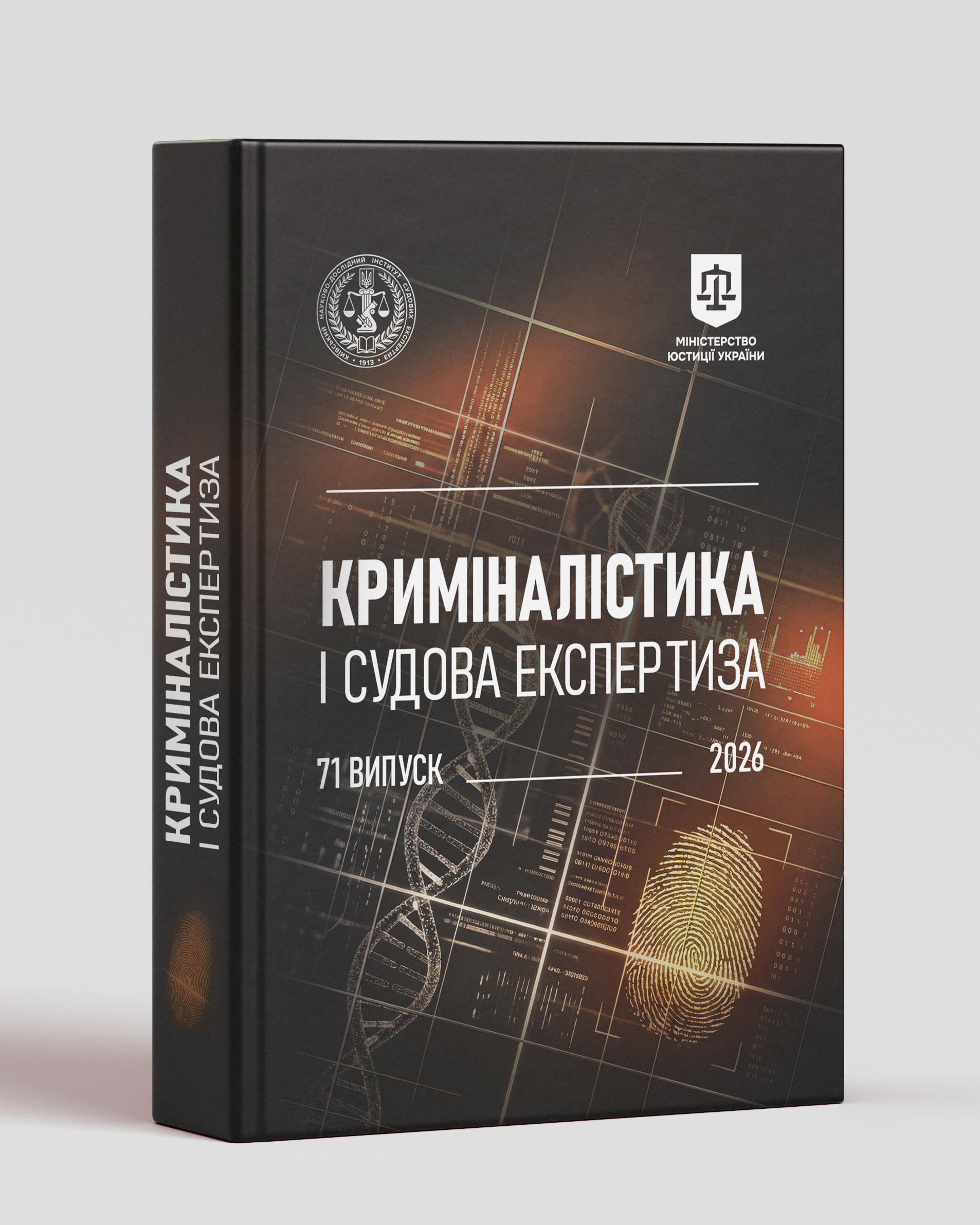
Keywords
destructive information-psychological influence
behavior
information operations
psychological operations (PSYOP)
manipulative technologies
How to Cite
Abstract
The article highlight the problematic issues of psychological research on destructive information-psychological impact in the context of the Russian Federation’s aggression against the state of Ukraine during comprehensive forensic psycho-linguistic examinations. The purpose of the study is a comprehensive analysis of the hybrid warfare component in the conditions of unprovoked aggression of the Russian Federation against Ukraine, which began in February 2014 and escalated into a full-scale war in February 2022. Specifically, it focuses on information warfare and information operations as objects of expert research in comprehensive forensic psycholinguistic examinations. The study provides a clarification of the differences between such concepts as “information warfare,” “information-psychological operation”. The methodological basis of the work consists of general scientific and specialized research methods, including description, analysis, synthesis, generalization, comparison, evaluation of the content of information-psychological impact on a mass audience from the perspective of psychological influence, and the synthesis of scientific sources and forensic expert practice. The scientific novelty lies in the author’s comprehensive approach to researching the tasks, content, and goals of information-psychological operations at the strategic, operational-tactical, and operational levels. The purpose of manipulative influence on mass consciousness is revealed in detail, and the levels of consciousness manipulation during hybrid warfare are described. The main forms and methods used by the enemy to manipulate the consciousness of target audiences are analyzed. In the conclusions, it is emphasized that the complexity of psychological research during comprehensive psycho-linguistic examinations regarding crimes against the foundations of national statehood requires experts to enrich and develop their specialized knowledge, skills, and professional competencies.
References
Balahura V., Honcharenko Yu., Kanishev K. Refleksyvne keruvannia v informatsiino-psykholohichnykh operatsiiakh pid chas rosiisko-ukrainskoi viiny [Reflexive control in information and psychological operations during the Russian-Ukrainian war]. URL: https://infolight.in.ua/wp-content/uploads/2024/04/broshura-berezen.pdf (accessed: 27.03.2026) [in Ukrainian].
Horbulin V.P. (Ed.). (2017). Svitova hibrydna viina: ukrainskyi front: monohrafiia [World hybrid war: the Ukrainian front: monograph]. Kyiv: NISD. 496 p. [in Ukrainian].
Dolynkivska S., Bozhenko A. (2025). Osoblyvosti provedennia linhvistychnoi ta kompleksnoi psykholoho-linhvistychnoi ekspertyzy movnykh obiektiv zi vstanovlenniam v nykh oznak destruktyvnoi shchodo ukrainskoi derzhavnosti informatsiinoi diialnosti [Features of conducting linguistic and complex psychological-linguistic examination of language objects with the identification of signs of information activity destructive to Ukrainian statehood]. Sudovo-linhvistychna ekspertyza v umovakh voiennoho stanu : zb. materialiv Vseukr. nauk.-prakt. konf. (Kyiv, 24–25.11.2025) [Forensic linguistic examination under martial law: proceedings of the All-Ukrainian scientific-practical conference (Kyiv, November 24–25, 2025)]. Kharkiv: NNTs “ISE im. Zasl. prof. M.S. Bokariusa”, 36–44 [in Ukrainian].
Istoriia informatsiino-psykholohichnoho protyborstva [History of information and psychological confrontation]. (2012). Ye.D. Skulysh (Ed.). Kyiv: Naukovo-vydavnychyi viddil Natsionalnoi akademii SB Ukrainy. 212
p. [in Ukrainian].
Leonov B., Lykhova S. (2021). Informatsiinyi teroryzm yak zahroza natsionalnii bezpetsi Ukrainy [Information terrorism as a threat to national security of Ukraine]. Scientific works of National Aviation University. Series: Law Journal “Air and Space Law”, 2(59), 170–176 https://doi.org/10.18372/2307-9061.59.15615 [in Ukrainian].
Lytvynenko E., Babych S. (2025). Rosiiskyi teroryzm yak predmet ekspertnoho psykholohichnoho ta psykholoho-linhvistychnoho doslidzhennia [Russian terrorism as a subject of expert psychological and psychological-linguistic examination]. Aktualni pytannia sudovoi ekspertolohii, kryminalistyky ta kryminalnoho protsesu : materialy VII mizhnar. nauk.-prakt. konf. (Kyiv, 10.12.2025) [Current issues of forensic expertology, criminalistics and criminal procedure: proceedings of the VII international scientific-practical conference (Kyiv, December 10, 2025)]. M.Ye. Kyselov (Ed.). Kyiv: Vydavnytstvo Lira-K, 225–230 [in Ukrainian].
Lytvynenko E., Stromylo A. (2024). Idei ta ideolohemy rosiiskoi propahandy yak predmet psykholohichnoho doslidzhennia u kompleksnykh sudovykh psykholoho-linhvistychnykh ekspertyzakh [Ideas and ideologemes of Russian propaganda as a subject of psychological examination in комплексних forensic psychological- linguistic examinations]. Sudovo-ekspertna diialnist : problemy, stratehii ta innovatsii : materialy mizhnar. nauk.-prakt. konf. (Lviv, Kyshyniv, Kyiv, Odesa, 28 lystopada 2024 roku) : tezy dopovidei [Forensic expert activity: problems, strategies and innovations: proceedings of the international scientific-practical conference (Lviv, Chisinau, Kyiv, Odesa, November 28, 2024)]. Lviv: Rastr-7, 206–208 [in Ukrainian].
Lytvynenko E.S., Stromylo A.P. (2024). Vyznachennia oznak vykorystannia manipuliatyvnykh tekhnolohii u movlennievii diialnosti pidekspertnykh osib u sudovykh psykholoho-linhvistychnykh ekspertyzakh u kryminalnykh provadzhenniakh shchodo zlochyniv proty osnov natsionalnoi bezpeky [Identification of signs of manipulative technologies use in speech activity of examined persons in forensic psychological-linguistic examinations in criminal proceedings concerning crimes against national security foundations].
Kryminalistyka i sudova ekspertyza, 69, 679–699 https://doi.org/10.33994/kndise.2024.69.60 [in Ukrainian].
Mehel A., Yaremchuk M. (2022). Vorozhi IPSO. Yak vyznachyty ta protystoiaty [Hostile IPSO. How to identify and counteract]. Kyiv: Vyd. dim “SKIF”. 98 p. [in Ukrainian].
Onkovych A. (2021). Sotsmerezha Feisbuk ta informatsiino-psykholohichni operatsii [Facebook social network and information-psychological operations]. Ukrainskyi informatsiinyi prostir, 1(7), 206–220. DOI: https://doi.org/10.31866/2616-7948.1(7).2021.233974 (accessed: 27.03.2026) [in Ukrainian].
Shmalenko Yu.I., Matviienkiv S.M., Koltsov V.M. (2022). Problemy ta perspektyvy rozvytku natsionalnoho informatsiinoho prostoru Ukrainy [Problems and prospects for the development of the national information space of Ukraine]. Aktualni problemy filosofii ta sotsiolohii, 37, 223–227. DOI: https://doi.org/10.32782/apfs.v037.2022.37 (accessed: 27.03.2026) [in Ukrainian].
Shulska N.M., Bukina N.V., Adamchuk N.V. (2023). Typolohichni markery informatsiino-psykholohichnykh operatsii (IPSO) v umovakh viiny v media [Typological markers of information-psychological operations (IPSO) in wartime media]. Vcheni zapysky TNU imeni V.I. Vernadskoho. Seriia: Filolohiia. Zhurnalistyka, 34(73), 1(2), 268–272. DOI:
https://doi.org/10.32782/2710-4656/2023.1.2/42 (accessed: 27.03.2026) [in Ukrainian].
Shcho take IPSO: povnyi hid po informatsiino-psykholohichnykh operatsiiakh [What is IPSO: a complete guide to information and psychological operations]. URL: https://nfront.org.ua/shho-take-ipso-povnyj-gid-po-informaczijno-psyhologichnyh-operacziyah/ (accessed: 27.03.2026) [in Ukrainian].
Uzdienova Yuliia. (2024). Informatsiino-psykholohichna operatsiia yak skladova informatsiinoi viiny [Information-psychological operation as a component of information warfare]. KELM. Knowledge, Education, Law, Management, 4(64), 80–88. DOI: https://doi.org/10.51647/kelm.2024.4.12 (accessed: 27.03.2026) [in Ukrainian].