
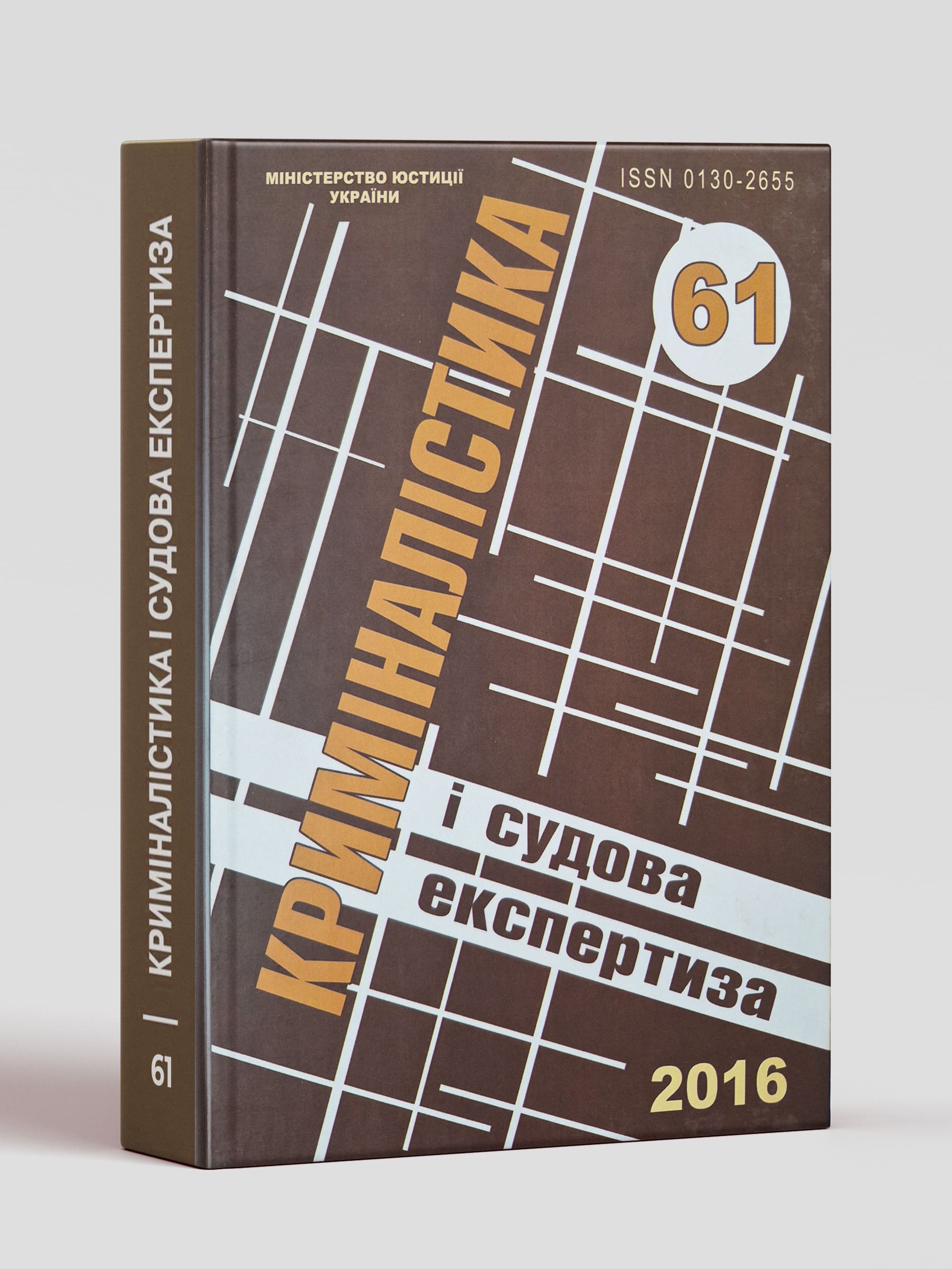
Keywords
How to Cite
Abstract
Forensic expert activity has always attracted the attention of researchers. As a result of the hard work of scholars and practitioners, a methodological basis was established in the corresponding field of scientific knowledge (the general theory of forensic expertise, or forensic expertology). It is obvious that any branch of scientific knowledge should have a practical application to resolve issues encountered during forensic expert activity.
Forensic expert activity is a type of legal activity and, apart from common legal aspects, is characterized by specific features. In realizing the goal of resolving criminal proceedings, these features include: legal regulation; alignment with the objective of establishing evidence through the direct application of specialized knowledge to the object of study by the expert; and evaluation of the evidentiary value of the expert's conclusion regarding both its content and compliance with procedural rules, the violation of which deprives the conclusion of its evidentiary significance.
The content of forensic expert activity, like any other form of social activity, finds expression in its tasks, which can be divided into general and specific. The general tasks include: the organization of work in forensic expert institutions and their units; the implementation of new research methods and modern expert techniques into practice, ensuring their use in conducting examinations and preventive measures; the selection, placement, training, and education of staff, fostering responsibility for official duties and compliance with legislation; and explanatory work with law enforcement to familiarize them with modern forensic capabilities.
A new and vital task in modern reality is the implementation of international cooperation in the field of forensic expertise. This includes conducting forensic examinations on behalf of competent authorities or individuals from another state, involving experts from other states to conduct forensic examinations, and engaging in international scientific cooperation.
During their activity, the expert resolves individual tasks that depend on the specific conditions of the research. Every individual task facing the expert should be precisely defined and aligned with other tasks and the general purpose of forensic expert activity.
References
Averʹyanova T. V., Belkyn R. S., Korukhov YU. H., Rossynskaya E. R. Krymynalystyka: ucheb. dlya vuzov. 3-e yzd., pererab y dop. Moskva, 2008. 992 s.
Averʹyanova T. V. Étapy razvytyya sudebnoy ékspertyzy // Uchenye-krymynalysty y ykh rolʹ v sovershenstvovanyy nauchnykh osnov uholovnoho sudoproyzvodstva: mater. nauch.-prakt. konf.(k 85-letyyu so dnya rozhdenyya R. S. Belkyna): v 2-kh ch. Moskva, 2007. CH.1. S. 257-266.
Ishchenko A. V. Metodolohichni problemy kryminalistychnykh naukovykh doslidzhenʹ: monohr. / za red. I. P. Krasyuka. Kyyiv, 2003. 359 s.
Shcherbakovskyy M. H. Sudebnye ékspertyzy: naznachenye, proyzvodstvo, yspolʹzovanye: ucheb.-prakt. posob. Kharkiv, 2005. 544 s.
Sehay M. YA. Obʺekt, predmet, pryroda y systema krymynalystyky // Teoriya i praktyka sudovoyi ekspertyzy ta kryminalistyky: zb. nauk.-prakt. materialiv (do 80-richchya zasnuvannya Kharkivsʹkoho NDI sudovykh ekspertyz). Kharkiv, 2003. Vyp. 3. S. 25-32.
Forys YU. B. O formyrovanyy sudebno-ékspertnoho prava: postanovka problemy // Teoriya i praktyka sudovoyi ekspertyzy ta kryminalistyky: zb. nauk.-prakt. materialiv (do 80-richchya zasnuvannya Kharkivsʹkoho NDI sudovykh ekspertyz). Kharkiv, 2003. Vyp. 3. S. 45-48.
Fylyppov A. H. Eshche raz k voprosu o systeme krymynalystyky // Vestnyk kryminalystyky / otv. red. A. H. Fylyppov. Moskva, 2001. Vyp. 2. S. 43–52.
Striletsʹ H. O. Henezys systemy sudovo-ekspertnykh ustanov v Ukrayini ta napryamky yikh diyalʹnosti: avtoref. dys. … kand. yuryd. nauk: spets. 12.00.09. Kyyiv, 2009. 19 s.
Uholovno-protsessualʹnyy kodeks Ukrayny: nauch.-prakt. kommentaryy / pod obshch. red. V. T. Malyarenko, YU. P. Alenyna. Kharkiv, 2005. 968 s.
Averʹyanova T. V. Subʺekty ékspertnoy deyatelʹnosty // Vestnyk krymynalystyky. Moskva, 2001. Vyp. 2. S. 29–37.
Kuzʹmichov V. S., Chornous YU. M. Slidcha diyalʹnistʹ: kharakterystyka ta napryamy udoskonalennya: monohr. Kyyiv, 2005. 446 s.
Kryminalʹnyy protsesualʹnyy kodeks Ukrayiny. Zakon Ukrayiny «Pro vnesennya zmin do deyakykh zakonodavchykh aktiv u zvʺyazku z pryynyattyam Kryminalʹnoho protsesualʹnoho kodeksu Ukrayiny»: chynne zakonodavstvo z 19 lyst. 2012 r.: ofits. tekst. Kyyiv, 2012. 382 s.
Pro sudovu ekspertyzu: zakon Ukrayiny vid 25 lyut. 1994 r. №4038-KHII // Vidomosti Verkhovnoyi rady Ukrayiny. 1994. № 28. St. 232 [Elektronnyy resurs]. – Rezhym dostupu: http://zakon2.rada.gov.ua/laws/show/4038-12
Klymenko N. I. Mizhnarodne znachennya sudovo-ekspertnoyi diyalʹnosti // Sudovo-ekspertna diyalʹnistʹ: suchasnyy stan ta perspektyvy rozvytku: zb. materialiv kruhloho stolu / red. kol.: O. L. Kobylyansʹkyy ta in. Kyyiv, 2015. S. 165-168.