
Keywords
How to Cite
Abstract
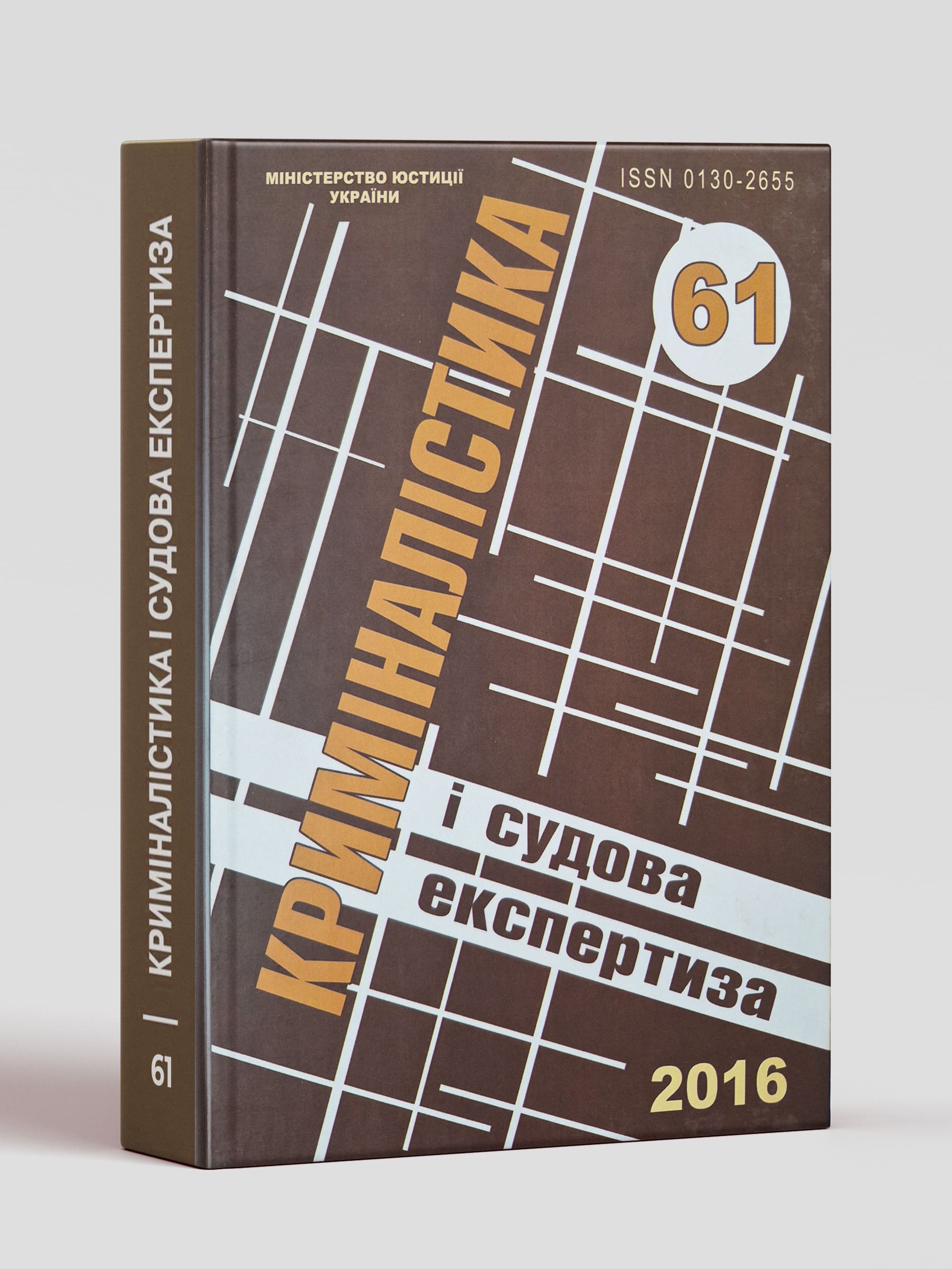
The article analyzes the development trends, didactics, and advancement of national criminalistics, as well as the controversial influence of certain provisions of the current Criminal Procedure Code of Ukraine. The author notes that highly ambiguous tendencies and processes have begun to emerge within criminalistics. Many researchers and developers have turned their primary focus toward the methodological foundations of the science, often giving rise to academic scholasticism and a tendency to complicate simple issues rather than simplify complex ones. Moreover, a professional shift has occurred, as numerous lecturers, academics, researchers, and practitioners have left the field for commercial projects, politics, and other sectors.
Scholars express concern regarding the domestic legislator's practice during the adoption of the Criminal Procedure Code, where conceptual developments of new institutional foundations were not preceded by independent academic discussions, critical scholarly reviews, or expert evaluations. An analysis of the provisions of the Criminal Procedure Code of Ukraine demonstrates that its authors, to appease political interests, excessively incorporated certain procedural mechanisms from both the Anglo-Saxon and continental legal systems into Ukrainian criminal procedure. This approach has led to numerous negative consequences, including the abolition of inquiry bodies, changes to the stages of criminal proceedings, and the deformation of the procedural status of investigators, prosecutors, and operational officers. Furthermore, pseudo-academic definitions in certain provisions of the Code have entailed legal conflicts, loopholes, and severe violations of the law within the criminal justice system. Concurrently, there is a decline in the general level of education and a growing disconnect between science and practice. Although the volume of printed literature has expanded significantly compared to Soviet times, its quality often leaves much to be desired.
In recent legal literature, leading national scholars in criminalistics (including V. H. Honcharenko, A. V. Ishchenko, V. Yu. Shepitko, V. A. Zhuravel, V. V. Tyshchenko, A. V. Volobuiev, and others) have emphasized the need for a comprehensive understanding of the role of criminalistics, not only within the professional activities of various legal practitioners but also within legal education as a whole. This issue extends beyond criminalists' internal perception of the scope, general trends, and developmental prospects of their discipline; it requires a detailed analysis of the practical demand for criminalistics in various legal fields and educational frameworks. This situation is further exacerbated by the fact that educational standards and future lawyers' competencies are frequently structured around formalistic controls rather than the effective organization and support of the educational process. Streamlining educational outputs through standardization alone fails to resolve fundamental structural deficiencies.
Finally, the article underscores the critical necessity of examining the formation and maintenance of a criminalistic style of thinking in various practical situations. A lawyer's practical activity remains a vital, yet incompletely explored, area regarding how a specialized criminalistic mindset is cultivated as the foundation for sound decision-making in complex legal circumstances.
References
Honcharenko V. H. Metodolohichni problemy vchennya pro predmet kryminalistyky // Aktualʹni problemy kryminalistyky: materialy mizhnar. nauk.-prakt. konferentsiyi Kharkiv, 25–26 veresnya 2003 r. Kharkiv, 2003. S. 11–13.
Aleksandrov A. S. Semʹ smertnykh hrekhov sovremennoy krymynalystyky [Elektronnyy resurs]. Rezhym dostupu: http://iuaj.net/node/342#comment-11. Opublikovano Anrc u Cht., 20/05/2010 - 09:28.
Kohutych I. I. Shchodo vykladu profesorom O. S. Aleksandrovym “superechnostey ta problem” suchasnoyi kryminalistyky // Aktualʹni pytannya reformuvannya pravovoyi systemy Ukrayiny: zb. nauk. st. za materialamy VIII Mizhnar. nauk.-prakt. konf. Lutsʹk, 17–19 chervnya 2011 r. Lutsʹk, 2011. S. 290–292.
Kohutych I. I. Novatsiyi kryminalistyky pid vplyvom KPK Ukrayiny // Problemy derzhavotvorennya i zakhystu prav lyudyny v Ukrayini: mat-ly KHKHII zvitnoyi nauk.-prakt. konf. (4–5 lyutoho 2016 r.): u 2-kh ch. Lʹviv, 2016. CH. 2. S. 207–213.
Korzh V. P. Problemy razvytyya krymynalystyky v uslovyyakh realyzatsyy uholovnoho protsessualʹnoho zakonodatelʹstva Ukrayny // Sovremennaya krymynalystyka: problemy, tendentsyy, perspektyvy: materyaly Mezhdunar. nauch.-prakt. konf., posvyashch. 90-letyyu so dnya rozhdenyya N. P. Yablokova. Moskva, 22 dekabrya 2015 h. / red.-sost. M. A. Lushechkyna. Moskva, 2015. S. 75–78.
Zhuravlev S. YU. Krymynalystycheskaya metodyka y taktyka: kontekst sovremennoho ponymanyya roly krymynalystyky v yurydycheskoy deyatelʹnosty y yurydycheskom obrazovanyy // Sovremennaya krymynalystyka: problemy, tendentsyy, perspektyvy: materyaly Mezhdunar. nauch.-prakt. konf., posvyashch. 90-letyyu so dnya rozhdenyya N. P. Yablokova. Moskva, 22 dekabrya 2015 h. / red.-sost. M. A. Lushechkyna. Moskva, 2015. S. 49–53.