
Keywords
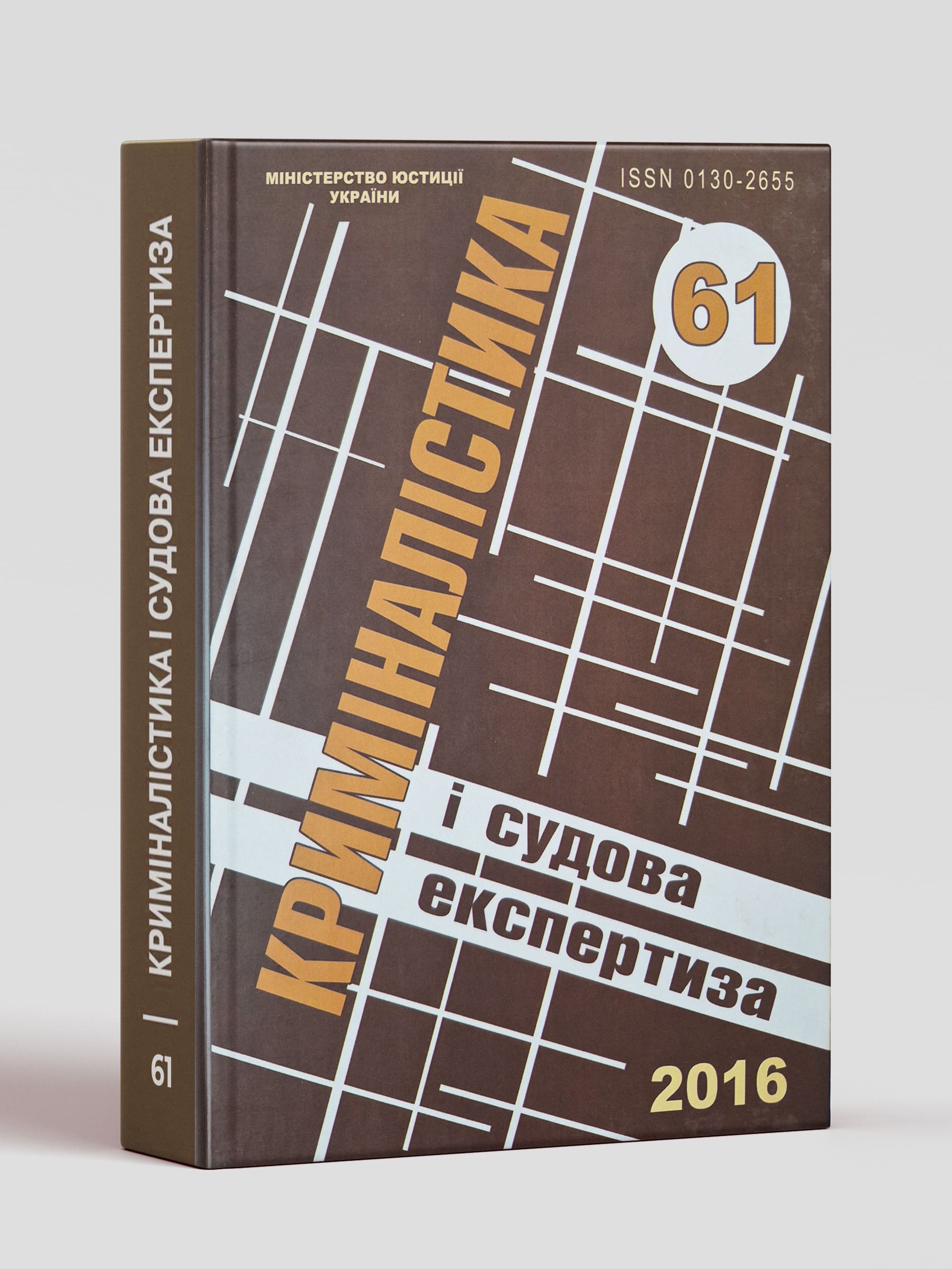
How to Cite
Abstract
The scientific article is devoted for the general concepts of diagnosis, the subject of forensic handwriting diagnostics in terms of the discussion and its relation to legal graphology and the general theory of judicial review. It deals with the general concepts of diagnosis, the subject of forensic handwriting diagnostics in terms of the discussion and its relation to legal graphology, as well as the general theory of judicial review. It is also given the concept of vision handwriting diagnostics presented by different authors (P. Belkin, L. Arotsker, V. Seregin, Z. Melenevskaya, G. Kupriyanova), its current state, the subject and object of the research. The possibility of establishing external circumstances, conditions of performance manuscripts (signature), the establishment of the internal state of the writer using the developed classification of diagnostic features with a forensic handwriting analysis. The patterns display general physical characteristics: gender, age, degree of development of visual-motor apparatus etc; subjective (individual) characteristic - the type of higher nervous activity, behavioral characteristics (accuracy, negligence, pedantry, lack of organization, etc.), the type of temperament, characteristics of nervous processes (anxiety, resistance, restraint), business skills (style of work, attitude to the point, the ability to combine, etc.); socio-demographic data of a person: nationality, residential area, level of education; identifying skills manuscript artist - professional, stenographic, drawing and others.
References
Arotsker L. Ye., Bogachkina G. R., Dobroslavskaya Ye. Ye. i dr. Sudebno-pocherkovedcheskaya ekspertiza. Moskva, 1971. 304 s.
Sudebno-pocherkovedcheskaya ekspertiza. Obshchaya chast': metod. posob. dlya ekspertov, sledovateley, sudey. Moskva, 1988. Vyp. 1. 125 s.
Melenevs'ka Z. S., Svoboda Ê. YU., Shabotenko A. Í. Sudovo–pocherkoznavcha yekspertiza: navch.-metod. posíbnik. Kií̈v, 2007. 277 s.
Kupriyanova A. A. Metodicheskiye rekomendatsii resheniya sudebno-pocherkovedcheskikh diagnosticheskikh zadach. Minsk, 1982. 61 s.
Kupriyanova A. A. Neidentifikatsionnyye (diagnosticheskiye) priznaki v sudebno-pocherkovedcheskoy ekspertize i osnovy ikh sistematizatsii // Sovremennoye sostoyaniye sudebno-pocherkovedcheskoy ekspertizy i perspektivy yeye razvitiya: materialy nauch.-prakt. seminara v g. Kuybysheve, oktyabr' 1980. Moskva, 1981. S. 138-142.
Arotsker L. Ye. Neidentifikatsionnyye issledovaniye v pocherkovedcheskoy ekspertize / KHNIISE; otv. red. L. Ye. Arotsker. Kiyev, 1972. 96 s.
Lipovskiy V. V. Issledovaniye pocherka s tsel'yu ustanovleniya vremeni ispolneniya rukopisi // Kriminalistika i sudebnaya ekspertiza. Kiyev, 1992. Vyp. 45. S. 23-27.
Seregin V. V. Vozmozhnosti sudebno-pocherkovedcheskoy diagnostiki svoystv ispolniteley : avtoref. dis. … kand. yurid nauk / VNIISE. Moskva, 1983. 18 s.
Kupriyanova A. A. O vozmozhnosti resheniya neidentifikatsionnykh sudebno-pocherkovedcheskikh zadach, svyazannykh s ustanovleniyem konkretnogo psikhicheskogo zabolevaniya (shizofrenii) // Ekspertnaya praktika i novyye metody issledovaniya: ekspress-informatsiya. Moskva, 1978. S. 14-23.
Kupriyanova A. A. K voprosu o vliyanii na protsess pis'ma alkogol'nogo op"yaneniya // Voprosy kriminalistiki i sudebnoy ekspertizy. Minsk, 1980. Vyp. 7. S. 34.
Melenevskaya Z. S. Problemnyye voprosy razvitiya sudebnogo pocherkovedeniya / Z. S. Melenevskaya // Aktual'nyye problemy organizatsii sudebno-ekspertnogo i tekhniko-kriminalisticheskogo obespecheniya raskrytiya i rassledovaniya prestupleniy na sovremennom etape: materialy mezhdunar. nauch.-prakt. konf. Kiyev 14-15 noyabrya 2013. Kiyev, 2014. S. 58-63.
Moravs'ka V. V. Ponyattya krimínalístichnoí̈ díagnostiki ta í̈í̈ naukoví osnovi / V. V. Moravs'ka // Problemní aspekti yekspertnoí̈ praktiki: materíali kruglogo stolu. (Kií̈v 4 grudnya 2014 roku). Kiyev, 2014. S. 189-190.
Dubrovín V. Í. Krimínalístichna díagnostika v naukovomu doslídzhenní. Leningrad, 2001.
Krimínalístichna díagnostika pri rozslíduvanní zlochinu / za red. YU. G. Korukhova. Moskva, 2001. S. 14-18.