
Keywords
How to Cite
Abstract
In general understanding Expert mistake — this is an inappropriate objective reality judgment of the expert or his actions, which did not lead to solving the problem of expert research, or erroneous judgments resulting from bona fide error. This is what distinguishes an expert error from criminal offenses against justice. Expert errors, although they have common features, but differ significantly particularity of the content (information, etc.) during the different types of forensic investigations, such as forensic ballistic. This, for example, due to be bound by the peer during the experiment forensic ballistic study of firearms, ammunition, ammunition, and the next shot, which in turn is not a mandatory element of stages during other types of forensic examinations.
When conducting forensic identification no ballistic studies arise disadvantages that its content does not affect the conclusion of the expert, but reduce their validity, which can cause additional appointment, re-examinations or commission. When a forensic ballistic studies are more common following disadvantages: incomplete and inaccurate descriptions of the objects, samples and other materials; incompleteness of the study; misjudging the signs of the objects and specimens; improper or insufficient justification (argument) conclusions. The most common deficiencies arise in the description of firearms — the use of incorrect terms, the lack of data about the significant individualizing attributes of the object. In the description of firearms and ammunition factory manufacturing must use the terminology provided and recommended national standards of Ukraine.
In solving the problems of identification in forensic ballistic studies (identification of weapons in the footsteps on bullets and cartridge cases) are often not specified in the conclusions of individualizing features of the objects (bullets, shells, weapons), namely the presence: of markings; Special anti-corrosion coating (red brass colored varnish on the edge of the sleeve caps and dulcitol, colored vertices bullet et al.); traces of handling abrasive agents and metal working tools; deformation, fragmentation and damage; of impurities and accretions substances.
Troubleshooting, and better prevention of the above errors and deficiencies in the forensic ballistic research will enhance the quality of argumentation, validity and evidentiary value of output in the effectiveness of their use in the implementation of the investigative and judicial practice. In the investigation of criminal offenses related to the use or the use of firearms, ammunition.
References
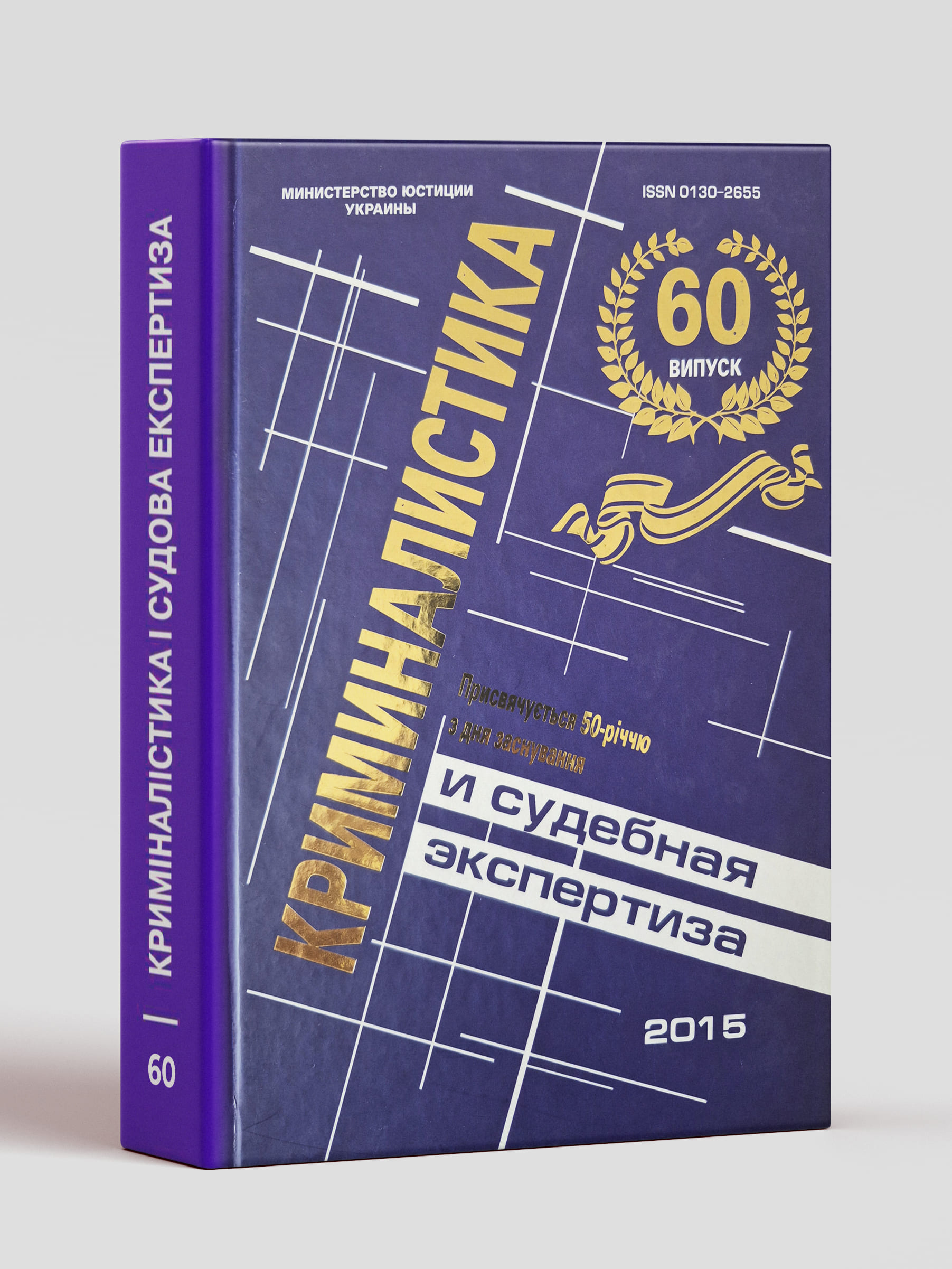
Abramova V. M. Pomylky v sudovo-ekspertniy diyalʹnosti: sutnistʹ, umovy vynyknennya ta vydy / V. M. Abramova, YE. YU. Svoboda // Krymynalystyka y sudebnaya ekspertyza: mizhvid. nauk.-metod. zb. / KNDISE MYU Ukrayiny. — K., 2014. — Vyp. 59. — S. 72–78.
Berher V. E. Obraztsy ékspertnykh zaklyuchenyy. Ballystyka / V. E. Berher, YA. V. Rybalko. — K.: RYO MVD USSR, 1988. — 172 s.
Pro sudovu praktyku v spravakh pro vykradennya ta inshe nezakonne povodzhennya zi zbroyeyu, boyovymy prypasamy, vybukhovymy rechovynamy, vybukhovymy prystroyamy chy radioaktyvnymy materialamy: postanova Plenumu Verkhovnoho Sudu vid 26.04.2002 № 3 // Visnyk Verkhovnoho Sudu Ukrayiny. — № 4 (32). — K., 2002.